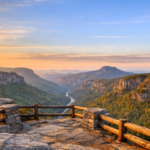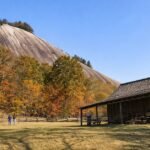
There are places you visit once and forget and then there are places that quietly stay with you long after you’ve left. Stone Mountain State Park belongs firmly in the second category.
Set in the foothills of North Carolina’s Blue Ridge Mountains, this park is defined by a massive granite dome, cascading waterfalls, trout,filled streams, and miles of forested trails. It’s peaceful, uncrowded, and deeply scenic, the kind of place where time slows down and nature takes the lead.
Whether you’re planning a day hike, a camping trip, or a photography focused visit, this guide covers everything you need to know about Stone Mountain State Park.
What Makes Stone Mountain State Park Special?
Stone Mountain State Park is located in Alleghany and Wilkes counties, far from busy tourist hubs but close enough to feel accessible. The park spans thousands of acres of protected wilderness, combining forest, rivers, exposed granite, and mountain views in one landscape.
As part of the Blue Ridge Mountains, the park offers rugged terrain and untouched natural beauty without the crowds found in more famous destinations. What truly sets it apart is the balance of challenging hikes alongside easy waterfall walks, deep history paired with raw geology, and solitude without isolation.
This park genuinely feels like nature’s playground where — waterfalls, rugged trails, trout streams, and granite domes meet.
Geological Significance & Natural History
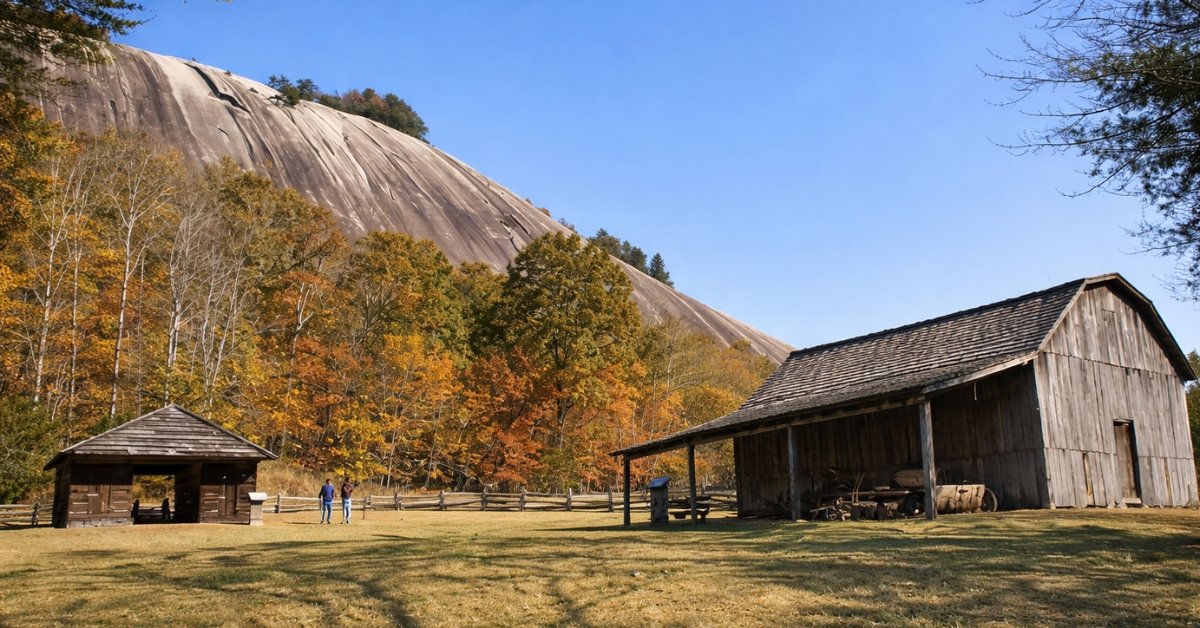
The park’s namesake, Stone Mountain, is a towering granite dome rising more than 600 feet above the surrounding valley. Formed over 300 million years ago, the mountain is composed of Devonian granite, pushed upward by geological forces deep beneath the Earth’s surface.
As softer rock eroded over time, the granite dome remained — exposed, massive, and unmistakable. Its rarity and scientific value earned Stone Mountain recognition as a National Natural Landmark.
Beyond the summit, Stone Mountain State Park protects diverse ecosystems. Hardwood forests, rocky slopes, clear streams, and river corridors support wildlife, native plant species, and seasonal wildflowers, making the park an important site for conservation and environmental education.
Hiking Trails at Stone Mountain State Park
Hiking is truly the heart of Stone Mountain State Park. The park’s well-maintained trail system winds through hardwood forests, along clear mountain streams, past historic sites, and up onto the park’s signature granite dome. Whether you are looking for a challenging summit hike or a peaceful walk beside waterfalls, the trails here offer something for every level of hiker.
Stone Mountain Loop Trail
- Distance: 4.5 – 4.9 miles
- Difficulty: Strenuous
- Why it’s special: Summit views, waterfalls, forest-to-granite transition
The Stone Mountain Loop Trail is the park’s most iconic and rewarding hike. This trail gives you the full Stone Mountain experience in one route. You’ll begin in shaded forest, gradually climbing past streams and seasonal wildflowers. Along the way, the trail passes Lower and Middle Falls, where water cascades over smooth rock ledges, excellent spots to pause, rest, and take photos.
As the trail climbs higher, the environment changes dramatically. Forest gives way to exposed granite as you approach the summit. The final stretch is steep and demanding, but the payoff is exceptional. From the summit, hikers are rewarded with wide-open panoramic views of the Blue Ridge foothills, rolling farmland, and distant mountain ridges. Clear days offer some of the best vistas in northwestern North Carolina. This hike is best suited for experienced hikers or those prepared for a physically demanding climb.
Stone Mountain Trail
- Distance: ~3.4 miles
- Difficulty: Moderate
- Why it’s special: Direct access to the summit with less elevation gain
The Stone Mountain Trail is the most direct route to the summit and a popular option for visitors who want the views without completing the full loop. While still a solid workout, it has a more gradual elevation gain compared to the Loop Trail.
This trail passes through wooded sections and open areas before reaching the granite surface near the top. Because it is shorter, many hikers choose this trail for an out-and-back hike, making it ideal for those with limited time. The summit views are just as impressive as those reached via the Loop Trail, making this one of the best “effort-to-reward” hikes in the park.
Middle & Lower Falls Trails
- Distance: ~1–2 miles (varies by route)
- Difficulty: Moderate
- Why it’s special: Scenic waterfall views along Big Sandy Creek
The Middle and Lower Falls Trails are among the most family-friendly and visually rewarding hikes in the park. These trails follow Big Sandy Creek, offering constant views of flowing water, moss-covered rocks, and shaded forest.
Lower Falls is easily accessible and especially beautiful after rainfall, while Middle Falls requires a bit more effort but feels more secluded. These trails are perfect for hikers who prefer a relaxed pace and want to enjoy the sights and sounds of water without a long or strenuous climb. They are also excellent choices for photography, especially in spring and fall.
Widow’s Creek Trail
- Distance: ~2.5+ miles
- Difficulty: Strenuous
- Why it’s special: Quiet creekside hiking and a peaceful waterfall
Widow’s Creek Trail is a lesser-used route that appeals to hikers seeking solitude. The trail follows Widow’s Creek through dense forest, creating a calm, secluded atmosphere far from the busier sections of the park.
The terrain is uneven and can be challenging in places, especially after rain, which contributes to its strenuous rating. The reward is a quiet waterfall and a sense of remoteness that many visitors miss. This trail is ideal for experienced hikers who enjoy nature, reflection, and fewer crowds.
Black Jack Ridge Trail
- Distance: ~1.5 miles
- Difficulty: Moderate
- Why it’s special: Calm forest walk, great for a slower pace
Black Jack Ridge Trail offers a gentler hiking experience compared to the summit routes. It winds through peaceful forest, making it an excellent option for casual hikers, families with older children, or anyone looking for a quiet walk in nature.
While it does not lead to dramatic overlooks or waterfalls, the trail provides a relaxing environment with opportunities to spot birds and wildlife. It is especially enjoyable in the early morning or late afternoon when the forest feels calm and undisturbed.
Waterfalls: The Highlights You Can’t Miss
Waterfalls are one of the biggest draws of Stone Mountain State Park.
- Stone Mountain Falls, Nearly 200 feet tall, this dramatic cascade flows over granite rock and is the park’s most iconic sight. (closed)
- Middle Falls & Lower Falls, Located along Big Sandy Creek, these falls are easily accessible and beautiful year round.
- Widow’s Creek Falls, A quieter, more secluded waterfall that feels hidden compared to the main trails.
Best time to visit waterfalls: spring and early summer, when water flow is strongest.
Camping at Stone Mountain State Park
Spending the night completely changes the experience.
Frontcountry Camping
The main campground includes:
- Tent sites
- RV and trailer sites
- Restrooms and bathhouses
- Fire rings and picnic tables
Backcountry Camping
For those seeking solitude, Stone Mountain State Park offers designated backcountry campsites located along hiking trails, providing a quiet and remote camping experience surrounded by forest and mountain scenery. These hike-in sites are minimal and undeveloped, encouraging self-sufficiency and a true wilderness feel, with fewer crowds, natural sounds, and dark skies that make the park feel especially peaceful after sunset.
Backcountry Camping Rules at Stone Mountain State Park
Backcountry camping at Stone Mountain State Park is carefully regulated to protect the park’s fragile ecosystem and ensure a safe, peaceful experience for all visitors.
- Camping is allowed only at designated backcountry campsites: Backcountry camping is permitted exclusively at officially marked backcountry sites. Dispersed or random camping is not allowed anywhere in the park. Campers must stay within the defined campsite area and may not clear vegetation, move rocks, or alter the site in any way.
- Reservations and permits are mandatory: All backcountry campers must obtain a valid backcountry camping permit before entering the park. Reservations are required in advance, especially during peak seasons such as spring and fall. Walk-in or same-day backcountry camping is generally not permitted, and campers should carry proof of reservation during their trip.
- Group size limits must be followed: Each backcountry campsite has a maximum occupancy limit. These limits are enforced to reduce overcrowding, noise, and environmental damage. Larger groups may be required to split across multiple sites if available. Exceeding group size limits can result in penalties or removal from the backcountry.
- Fire restrictions apply: Campfires are allowed only in designated fire rings where provided. Collecting firewood from the forest is strictly prohibited, as fallen wood plays an important role in the ecosystem. During dry weather or high fire-risk periods, the park may impose temporary fire bans. Campers are encouraged to use portable camp stoves whenever possible.
- Pack in, pack out (no trash services): There are no trash or recycling facilities in backcountry areas. Everything brought into the backcountry including food scraps, packaging, and hygiene waste must be carried out. Biodegradable items such as fruit peels and paper products must not be left behind, as they can harm wildlife.
- Proper food storage and wildlife safety are required: Food, trash, and all scented items must be stored securely at all times. Never leave food unattended at campsites or along trails. Feeding wildlife is strictly prohibited and can result in dangerous animal behavior. Responsible food storage protects both campers and wildlife.
- Stay on marked trails at all times: Hikers must remain on designated trails. Cutting switchbacks, creating shortcuts, or trampling vegetation is not allowed. Staying on established trails helps prevent erosion and protects sensitive plant species throughout the park.
- Quiet hours and low-impact behavior are enforced: Backcountry areas are meant to remain quiet and peaceful. Loud music, shouting, or disruptive behavior is not permitted. Quiet hours are enforced during evening and nighttime hours to preserve the natural atmosphere and ensure a true wilderness experience.
- Pet restrictions apply: Pets are generally not permitted in backcountry campsites. Where exceptions exist, pets must remain on a leash at all times and may not be left unattended. Campers should always confirm current pet regulations before planning their trip.
- Leave No Trace principles must be followed: All backcountry campers are required to follow Leave No Trace practices. This includes respecting wildlife, leaving natural features untouched, minimizing campsite impact, and disposing of human waste according to park guidelines. Violations may result in fines or loss of camping privileges.
- Time limits are strictly enforced: Backcountry camping is intended for short-term stays only. Campers are typically allowed to stay up to three consecutive nights at the same campsite. Extended stays beyond this limit are not permitted, and campers must leave the backcountry after the approved stay period.
- Check-in and check-out times must be respected: Campers must arrive and set up camp within the timeframe listed on their permit and fully vacate the campsite by the designated check-out time on the final day. Late departures may affect future reservations or result in penalties.
- Seasonal and permit-based limits may apply: Time limits and access rules may vary depending on seasonal demand, weather conditions, trail closures, or special park regulations. During peak seasons such as spring and fall, enforcement is often stricter due to high visitor numbers. Campers must always follow the duration approved on their permit.
- Check park conditions before your trip: Mountain weather can change quickly. Trail closures, fire restrictions, or safety advisories may be in effect at any time. Campers should always check official park updates or confirm conditions with the park office before entering the backcountry.
Things to Do Beyond Hiking
Stone Mountain State Park offers plenty of activities beyond the trails:
- Trout fishing in clear mountain streams
- Rock climbing on granite faces (experienced climbers only)
- Horseback riding on designated bridle trails
- Picnicking at scenic shelters
- Wildlife viewing & birdwatching, especially early mornings
This variety makes the park ideal for families, anglers, photographers, and outdoor enthusiasts.
History & Cultural Sites Inside the Park
Hutchinson Homestead
This restored 19th century homestead includes a cabin, barn, and blacksmith shop. It offers a rare look into early Appalachian mountain life and the challenges settlers faced in this rugged terrain.
Visitor Center
The visitor center features exhibits on:
- Mountain culture
- Natural history
- Local geology and wildlife
It’s an excellent starting point for first-time visitors.
Best Photography Spots
Photographers will find endless opportunities throughout the park:
- Sunrise and sunset from the granite summit
- Waterfalls after rainfall
- Autumn foliage against exposed rock
- Forest macro shots
- Wildlife along quieter trails
Drones are not permitted inside the park.
Best Time to Visit Stone Mountain State Park
Spring: Blooming wildflowers and powerful waterfalls
Summer: Shaded trails, ideal camping conditions
Fall: Spectacular Blue Ridge foliage
Winter: Quiet trails and peaceful solitude
Spring and fall offer the best overall experience, while winter is perfect for those seeking fewer crowds.
Pro Tips from an Actual Visit
- Arrive early parking fills quickly on weekends
- Wear shoes with strong grip; granite gets slippery
- Bring more water than you think you need
- Download trail maps before arrival (limited signal)
- Check weather twice, mountain conditions change fast
- Keep your receipt or park pass with you
- Sunrise and sunset are worth planning around
Helpful Planning Tips
- Cell service is limited
- Pets are allowed on leashes
- Follow Leave No Trace principles
- Use caution near wet rocks and steep granite
Sample One-Day Itinerary
Morning: Waterfall trails (Middle & Lower Falls)
Midday: Picnic near the creek
Afternoon: Stone Mountain Loop Trail
Evening: Sunset from the summit
Rules at Stone Mountain State Park
1. Swimming Restrictions
Swimming is not allowed in streams, waterfalls, or creeks within the park, including Big Sandy Creek and areas near Middle and Lower Falls. Fast currents, slippery rocks, and hidden drop-offs make swimming unsafe.
2. Alcohol Policy
Alcohol is prohibited in most areas of the park, including trails, picnic areas, and backcountry sites unless specifically authorized by the park. Open containers may result in citations.
3. Rock Scrambling & Off-Trail Climbing
Climbing or scrambling on non-designated rock faces or granite slabs outside approved climbing routes is not allowed. This helps prevent injuries and protects fragile lichen and plant life on exposed granite.
4. Rock Climbing Permit Requirement
Technical rock climbing is permitted only with proper registration or permits and is restricted to approved climbing areas. Climbers must follow seasonal closures that protect nesting raptors.
5. Fishing Regulations Beyond Trout Mention
Fishing is allowed only in designated waters and requires a valid North Carolina fishing license. All state fishing size limits, seasons, and creel limits apply. Bait restrictions may also apply in trout waters.
6. No Collection of Natural or Cultural Items
Removing rocks, plants, flowers, mushrooms, artifacts, or historical objects is strictly prohibited. Everything in the park is protected under state conservation laws.
7. Bicycles Limited to Designated Roads
Bicycles are not allowed on hiking trails unless clearly marked as multi-use. Riding is limited to park roads and designated areas only.
8. Weapons & Firearms Restrictions
Firearms, fireworks, and weapons are regulated under North Carolina state law. Discharging firearms or using fireworks anywhere in the park is prohibited.
9. Commercial Photography & Filming
Professional or commercial photography, videography, or drone-related filming (even without drones) requires prior written permission from park management.
10. Visitor Center & Facility Hours
Access to facilities such as the visitor center, restrooms, and picnic shelters is limited to posted operating hours. Remaining in closed areas after hours is not permitted.
11. Trail Closures & Temporary Restrictions
Trails may be closed without notice due to weather damage, ice, maintenance, wildlife activity, or safety concerns. Entering closed trails is a violation.
12. Littering & Fine Enforcement
Littering anywhere in the park, including parking lots and roadside areas, is subject to fines and penalties under North Carolina State Parks regulations.
13. Fires Outside Campgrounds
Fires are not allowed outside designated campgrounds or approved fire rings, including picnic areas and trail-side locations.
14. Vehicles & Parking Rules
Parking is allowed only in designated parking areas. Parking along roadsides, grass, or blocking access roads can result in towing or citations.
15. Wildlife Disturbance Laws
Harassing, approaching, or attempting to photograph wildlife at close range is prohibited. This includes birds, deer, reptiles, and aquatic species.
You may also read our blog “Best Hikes in Mammoth Cave National Park (2025) – Scenic Trails & Local Favorites”
Disclaimer
We make every effort to keep this blog post accurate, up to date, and reflective of the latest information available about Stone Mountain State Park. Our team regularly reviews and updates this guide to reflect changes in park rules, seasons, trail conditions, and visitor amenities.
That said, conditions within the park can change without notice due to weather, maintenance work, wildlife activity, or park management decisions. For the most current alerts, regulations, trail status, and camping availability, we strongly recommend checking directly with the official North Carolina State Parks website or contacting the park office before your visit. This ensures you have the most accurate and up-to-date information when planning your trip.